
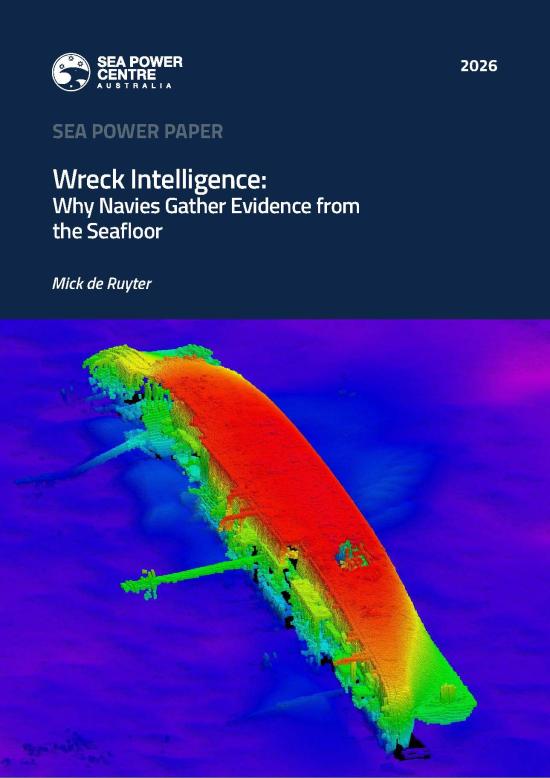
When a ship, submarine or aircraft, or even a missile or drone, is sunk at sea, most of the physical remains end up on the seafloor. Seabed infrastructure itself has long been a target in war. The wreckage that remains has usually lost its operational value but sometimes retains significant intelligence value. Beyond the need to recover sensitive assets, or deny them to or capture them from adversaries, wreckage can reveal the cause of sinking where this is otherwise unknown. Operations to find and investigate wreckage on the seafloor are often complex and can hold the highest national importance. Evidence from seafloor wreckage has been used to attribute attacks and justify military responses. Navies have been at the forefront of efforts to access and exploit wreckage on the seafloor, and the capability to do so is becoming increasingly widespread and accessible. This study uses historical and recent cases to investigate how navies have sought intelligence from the physical remains of things wrecked or lost at sea. It identifies the capabilities, skills, techniques and collaborations these efforts require and considers future scenarios that demonstrate the potential of wreck intelligence.


